
If you’ve ever asked a marketer, “Can you make my post go viral?” you’ve probably heard a long sigh. That’s because virality isn’t a strategy—it’s a fluke. Viral moments are like fireworks: bright, loud, and over in a flash. They’re exciting, but they leave you with a hot-smokin’ mess to clean up.
The truth is that a viral moment is only useful if it aligns with your business goals and you have a way to turn that attention into action. Without a strategy, the moment fades, and you’re left with nothing but a spike in vanity metrics.
The allure… and the fallout of going viral
When we see posts racking up millions of views or hear stories of overnight success, it’s hard not to fantasize about going viral. But, despite being highly unlikely in the first place (sorry), is going viral even a good thing for your business? More often than not, the answer is no.
Viral fame comes with a load of problems most people don’t anticipate. As Christopher Tompkins said in a Forbes article: “think about the consequences of going viral similarly to containing a literal virus”. And we all know how that went in 2020!
When going viral can be good for your business
Don’t get us wrong; going viral can absolutely be valuable when the attention reaches the right people, and you have a way to capture it. For example, a viral post might be useful if it:
- Introduces your brand to a large number of people in your target market
- Drives qualified traffic to your website
- Generates inquiries or sales
- Gets your product in front of potential partners, investors, or media
- Gives an existing campaign significant momentum
- Creates brand recognition in a market you’re actively trying to enter
How do you know if going viral was successful?
Going viral was successful if the attention generated a meaningful business outcome, not simply because a post received a large number of views.
But it doesn’t always work out that way…
5 risks of chasing viral success
In 2024, the image-sharing app Cara suddenly went viral. The user base shot from fewer than 100,000 to over 300,000 in days. However, as the user base grew, so did the app’s hosting costs, which ballooned from $2,000 to $100,000 for that week alone.
Spam flooded the platform, and developers had to scramble to keep the platform afloat. The viral success turned into a logistical nightmare, nearly destroying the business the founder worked so hard to build. That’s the thing about going viral—sudden attention inevitably brings sudden problems.
1. You can attract the wrong audience
Millions of views don’t mean millions of potential customers. Your follower count might jump, but are they the kind of people who’ll actually care about your work tomorrow? Probably not.
This is probably my most “viral” LinkedIn post:
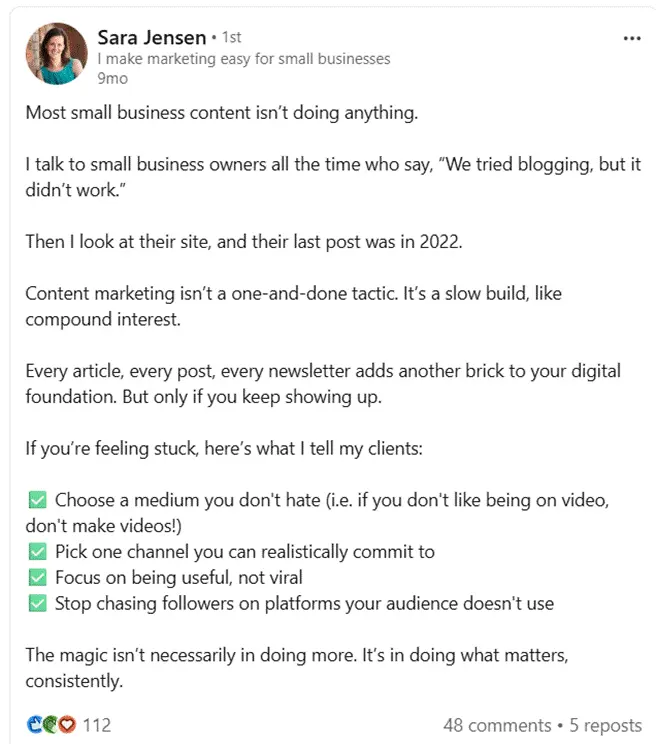
The numbers look great (compared to my usual stats), but most of my engagers were fellow marketers and agency owners who could relate, not small business owners lining up to become a client.
On the other hand, I’ve had posts with minimal engagement that have been seen by the right people and won me new business, so go figure.
2. Your infrastructure may not be ready
A sudden spike in inquiries, orders, or traffic can expose weaknesses in your website, fulfillment, customer service, or operations.
3. Viral content can distort your strategy
In the race to go viral, it’s easy to stray from your values. A post can perform spectacularly while having almost nothing to do with what you actually want to be known for.
4. You become dependent on rented attention
Platforms change algorithms, trends disappear, and audiences move. Your email list and website give you more control. Don’t build your house on rented land!
5. Viral attention can create reputational risk
A post reaching 100,000 people also means 100,000 opportunities for someone to misunderstand, criticize, or share it out of context.
Why sustainable growth is the smarter approach
Virality may give you a moment in the spotlight, but that moment is fleeting. And (truth bomb alert) it rarely leads to the long-term stability most businesses crave. In our opinion, aiming for sustainable growth is smarter, more rewarding, and way less of a headache. Sustainable growth takes time, patience, and effort, but it lasts, which is the real win.
Loyalty over likes
Sustainable growth builds relationships. When you focus on providing value to your target audience (quality content over quick hits), you create a loyal following that sticks around. These are the people who buy your products, recommend you to others, and continue supporting your business. Instead of a quick spike in sales or followers, you’re building a foundation that can weather market changes and competition.
You may also be interested in: 8 ways to build loyal customers through social media marketing
Predictable progress
With steady growth, you can plan ahead, plan smarter, and avoid burning out. You’ll have a clearer picture of your resources and revenue, making it easier to scale your business at a manageable pace.
Consistency beats trends
Slow and steady growth and staying true to your brand’s core values means you’re building trust. Over time, that trust becomes the foundation of your success. People know what to expect from you, and that reliability keeps them coming back.
Less pressure, more creativity
When you’re not chasing the next big hit, you can focus on creating meaningful content that resonates with your audience. This approach creates genuine engagement and gives you the freedom to experiment without fear of failure.
Play the long game with us
For a small business, 50 views from your ideal customers can be more valuable than 50,000 views from people who will never buy from you.
Remember that success isn’t about being seen by everyone. It’s about being valued by the right ones. Instead of chasing that one big moment, focus on creating consistent, meaningful content for the people who actually care. Build relationships, solve problems, stay true to your values, and grow your business over time.
Let us know if you’d like help building something that lasts.