
You spend money getting people to your website. You work on your SEO, post on LinkedIn, send emails, ask for referrals, and do all the other things that are supposed to bring potential customers your way. Then someone finally lands on your website and decides they want to talk to you.
The important (and oft overlooked) question is: Can they? And if they do manage to get in touch, does anyone respond?
We wanted to find out, so the Brighter Messaging team did a little secret shopping. As part of our contact form testing experiment, we visited the websites of 64 small businesses based in Holly Springs, Apex, and Fuquay Varina, NC. All are service-based businesses, including professional services, home services, health and wellness, legal, and financial services. We visited their websites and tried to contact them just like a prospective customer would.
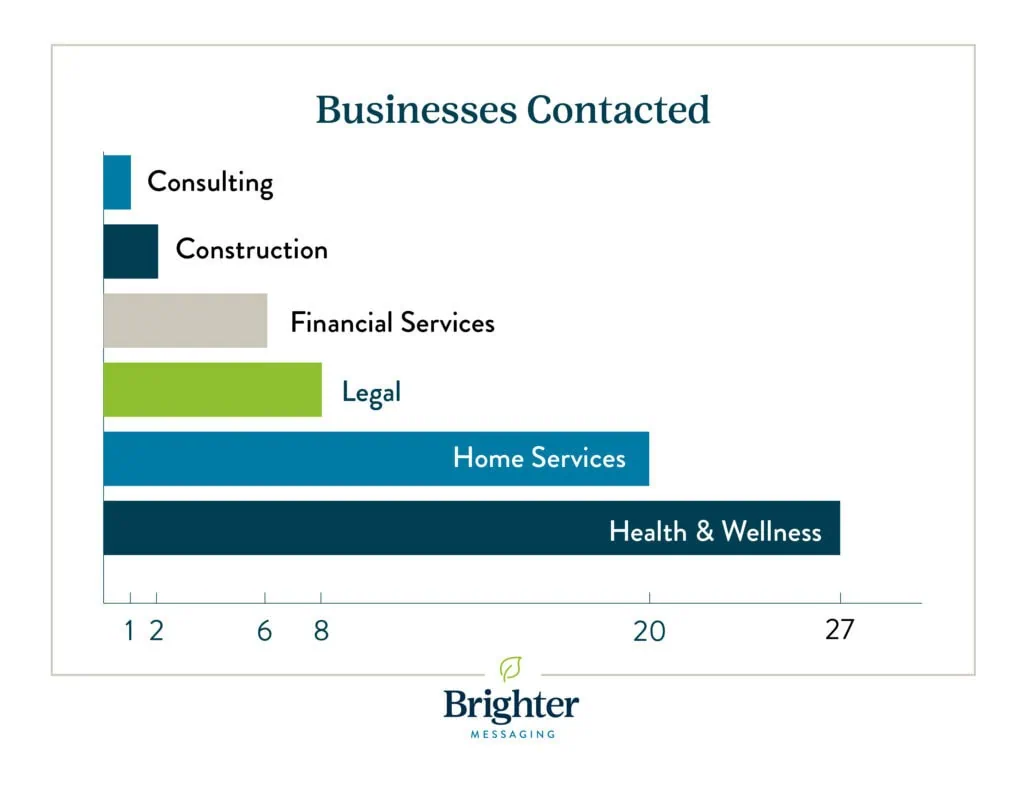
The results showed us that there are two different ways businesses may be losing leads:
- Some inquiries never make it through in the first place
- Others make it through, but nobody responds
Either way, if your website and inbound lead management process are falling down on the job, there’s a good chance that potential customer is moving on to the next option.
Nearly 1 in 6 businesses were difficult to contact online
For the purposes of this project, we tried to contact each business through its website, generally using the Contact form. In a few cases, sites didn’t include a contact form but did provide an email address, so we went that route.
Of the 64 businesses we assessed, we were able to successfully initiate an inquiry with 54. That means 15.6%, or nearly 1 in 6, could not be easily contacted through the available digital process we tested.
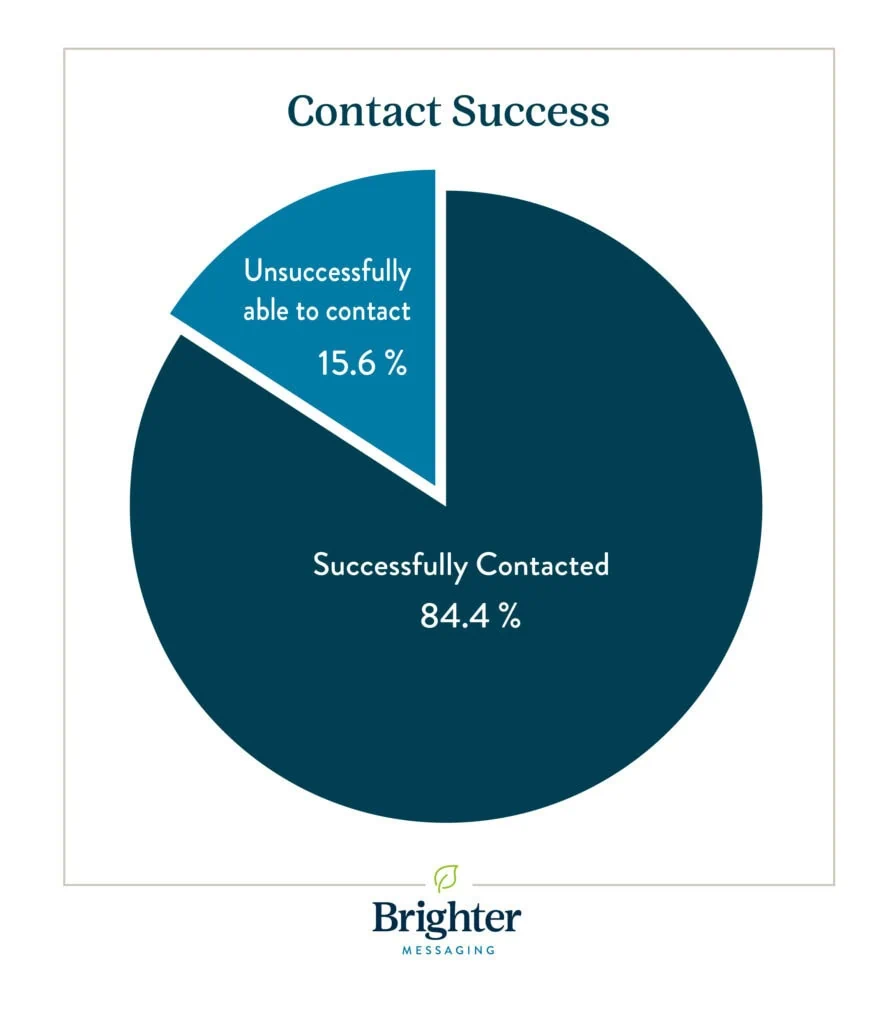
We ran into missing contact forms, forms that wouldn’t submit, required fields that rejected the information entered, and other website issues that stopped us from completing a straightforward inquiry. In some cases, the available contact options didn’t match what a potential customer might want to do. A website might push someone directly toward booking an appointment, for example, when that person simply has a question before they’re ready to commit. We saw that a lot with medical and aesthetics businesses. It’s great to be able to book an appointment online when that’s what a customer wants to do, but it’s often an overly aggressive ask of someone whose doing initial research.
Some businesses could theoretically have been reached another way, such as by picking up the phone, so we’re not suggesting these companies were completely unreachable. But that’s also missing the point. If someone is already on your website and wants to send an inquiry, how much work should you expect them to do? Probably not much. They likely have your competitor’s website open in the next tab.
The leads you never receive are the hardest ones to spot
A broken contact process creates an awkward problem for a business owner because you may have no idea it’s happening. Let’s say you run a small accounting firm. A potential client finds you through Google, reads about your outsourced accounting services, and decides your firm looks like a good fit. They fill out your contact form and click ‘Submit’ and nothing happens. They try again—still nothing. So they go back to Google and contact another accounting firm instead.
From your perspective, nothing happened that day. There’s no missed inquiry sitting in your inbox or lead in your CRM waiting for a follow-up. You have absolutely no idea that someone was interested enough to contact you and gave up. You might even look at your lead numbers and think you need more website traffic when the real problem is happening further down the customer journey.
You may also be interested in: 10 common (and fixable!) small business website mistakes you don’t want to make
Getting the inquiry is only half the job
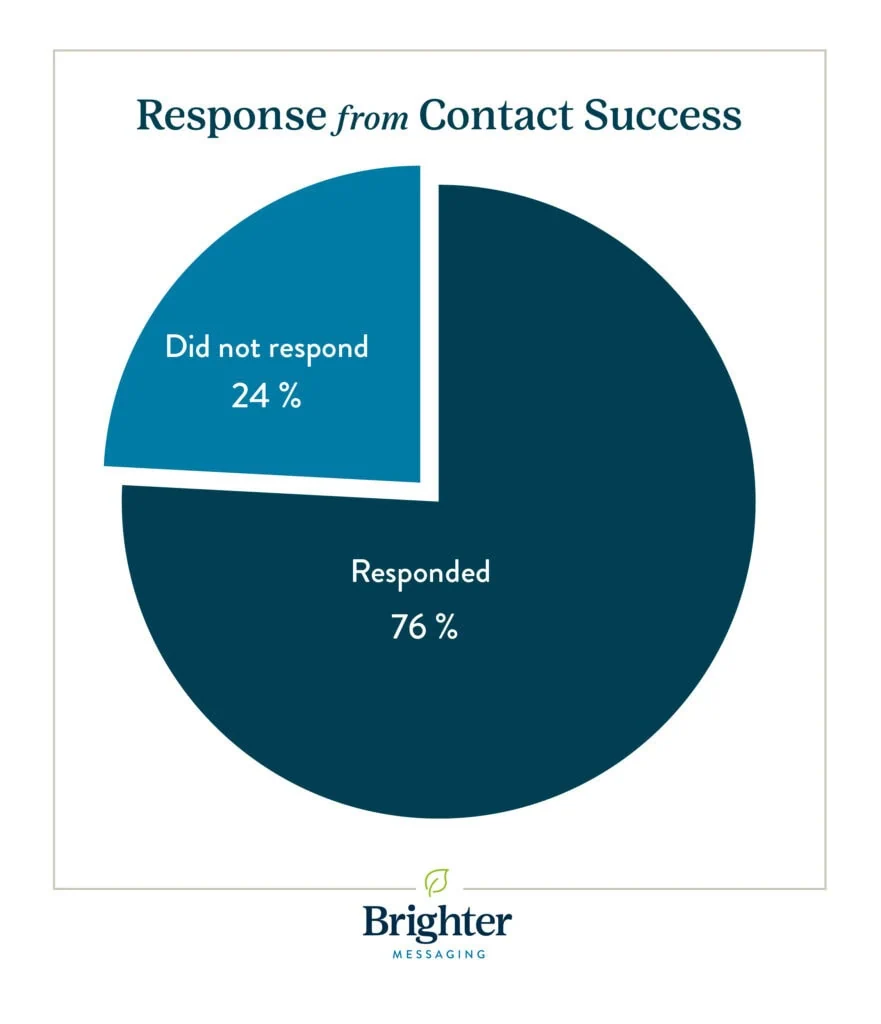
Being contactable doesn’t guarantee someone from the business will respond in a timely manner. Of the 54 businesses we were able to contact, 38 responded and 12 did not. That means 24% of businesses with a known outcome did not respond to the inquiry. (There were another four businesses where an inquiry appears to have been made, but the response outcome wasn’t clearly recorded, so we excluded them from that calculation rather than making assumptions.) Still, nearly 1 in 4 is a significant number.
Imagine someone looking for a marketing agency, attorney, accountant, or consultant. They may contact two or three businesses while they’re researching their options. If one replies and the other doesn’t, who do you think has the better chance of getting the business?
It sounds obvious when you put it that way, but leads can easily disappear into the day-to-day reality of running a small business.
The good news? Most businesses that responded were pretty fast
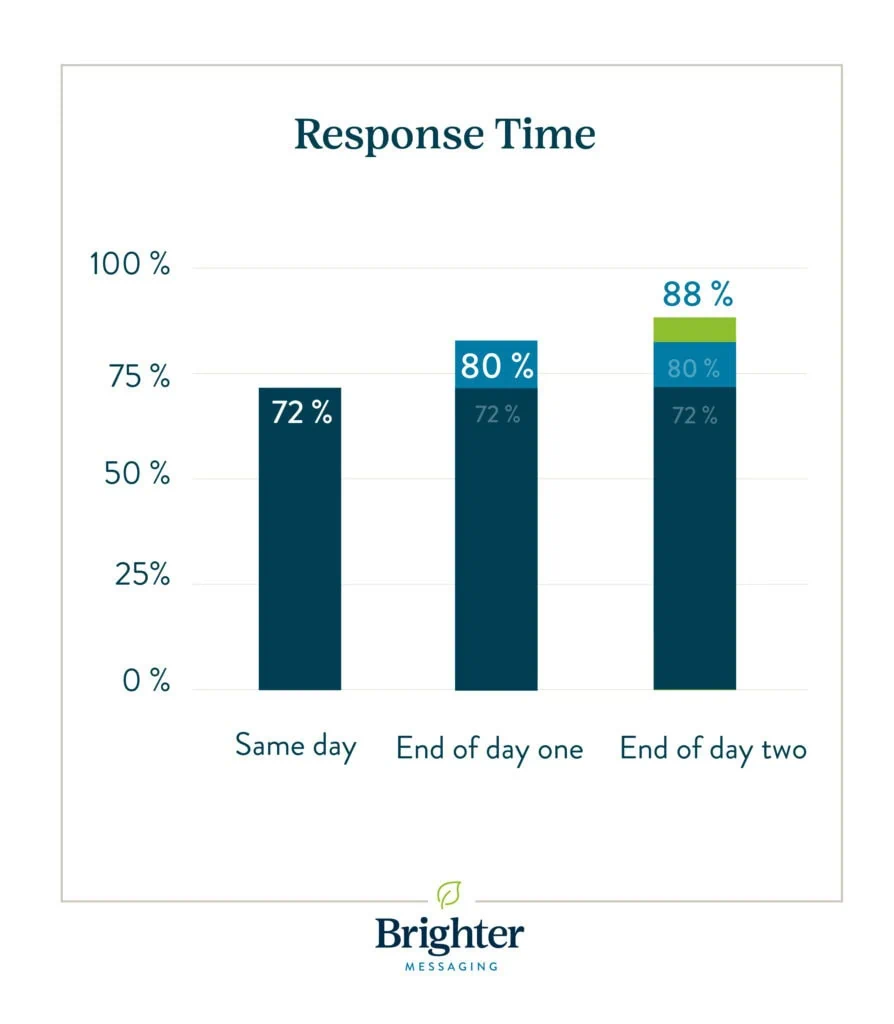
There was also a positive finding in our research. When businesses responded, many did so quickly. Among the responses where we had enough information to accurately measure response time:
- 72% came the same day
- 80% came within one day
- 88% came within two days
So, the problem doesn’t seem to be that small businesses are universally slow at following up. Many have a solid process and respond quickly when an inquiry comes in.
Key takeaway: Many of your competitors respond quickly. Are you keeping up?
The bigger issue is how inconsistent the experience can be from one business to the next. One company might respond within a few hours, while another never replies. With another, the customer might never manage to submit the inquiry at all.
Why your process matters: Your actual service might be excellent, but the potential customer hasn’t experienced that yet. At this point, your contact process is part of how they judge your business.
Your contact process is part of your marketing
Small businesses spend a lot of time thinking about how to generate leads, and understandably so. We talk about SEO, social media, email marketing, paid ads, referrals, and content because those things help people discover your business. But getting someone to your website is only one part of the process.
Once they arrive, your website needs to make the next step obvious and easy. For most professional service businesses, that means a potential client should be able to quickly work out how to contact you, choose a contact method that makes sense for what they need, and trust that someone will get back to them. If you’ve invested in marketing to get someone that far, you don’t want a broken form standing between you and a new client.
Which one would you choose?
These were some of our actual experiences:
- Business A: Fill in a form → get a phone call that day
- Business B: Fill in a form → hear nothing
- Business C: Try to fill in the form → required field doesn’t work
- Business D: Look for a form → there isn’t one → hunt for an email address
- Business E: Try to contact them → discover phone is the only option
- Business F: Send an inquiry → wait a week or longer
When did you last test your own contact form?
If you’re investing time and money into bringing people to your website, take 10 minutes this week and pretend you’re one of them. Fill out your own contact form, follow the process all the way through, and see what actually happens.
It’s also worth looking at the process from the customer’s point of view.
- Does the form submit properly?
- Do you get a confirmation message so you know it worked?
- Does the inquiry arrive in the right inbox?
- Who receives it?
- How quickly does someone respond?
- Are you asking for information you don’t actually need yet?
- Does someone have to create an account before they can talk to you?
- Are you forcing people to book a meeting when they might only want to ask a question?
Then check what happens behind the scenes. If your contact form goes to a general inbox, make sure someone owns that inbox. If leads are automatically routed to a team member, check that the routing still works when someone leaves the company or changes roles.
This is especially important for B2B and professional service businesses, where one inquiry can be worth thousands of dollars in future revenue. Losing that opportunity because nobody tested the contact form is an expensive mistake.
Don’t assume your contact process works
Our secret-shopping exercise was relatively small, and it wasn’t designed as a scientific study of every small business website. But after trying to contact 64 real businesses, we saw the same problem at two different points in the customer journey.
First, a potential customer has to be able to reach you. Then, once their inquiry lands, someone has to respond. If either part breaks down, all the work you did to get that person to your website may have been wasted.
So, before you spend more money trying to drive more traffic or generate more leads, try being one yourself. Go through your website as a potential customer would, submit an inquiry, and follow it all the way through.
And if your website is getting traffic but not enough of those visitors are turning into inquiries, Brighter Messaging can help you figure out where the disconnect is. Get in touch with us to talk about your marketing.
| About the data The Brighter Messaging team reviewed 64 small business websites across industries including professional services, home services, health and wellness, legal and financial services. We approached each business as a prospective customer and attempted to make an inquiry using the digital contact options available on its website. – We were able to successfully initiate an inquiry with 54 of the 64 businesses – 10 could not be easily contacted through the digital process we tested. – Of the 54 businesses we successfully contacted, 50 had a clearly documented response outcome – 38 responded, and 12 did not, giving us a 24% nonresponse rate among businesses with a known outcome – 4 businesses were excluded from the response-rate calculation because the outcome was not clearly recorded This was a small-scale secret-shopping exercise rather than a scientific study, but it gave us a useful snapshot of what a potential customer can experience when trying to contact a small business online. |